You're standing on the range in Chandler, watching your slice curve into the next bay, and the question hits: should you finally book a lesson, or just keep grinding buckets on your own? It's the eternal golfer debate, and in a market like ours — where you can practice year-round and the courses are stacked — the answer actually matters.
Here's the honest breakdown of golf lessons vs self practice, which is better in Chandler, AZ, and how to build a plan that gets you shooting lower scores before the snowbird crowds thin out in April.
The Core Difference: Feedback Loops
Solo practice builds reps. Lessons build correct reps. That's the whole ballgame.
When you hit balls alone, your body defaults to whatever swing feels comfortable — even if that swing is what's causing your slice, your fat shots, or your inconsistent contact. You're basically rehearsing your bad habits with beautiful commitment.
A coach breaks that loop. They see what you can't see, name what you're doing wrong, and give you a drill that fixes it. Then that is what you rehearse on your own.
When Solo Practice Actually Works
Self practice golf improvement is legit — but only under specific conditions.
- You already have a repeatable swing. If your mechanics are sound, range time sharpens tempo, distance control, and shot shaping.
- You're working on short game. Chipping and putting reward reps more than instruction, especially once you understand basic technique.
- You're using tech. Practice bays with shot trackers give you real feedback — launch angle, spin, carry distance. That's a form of coaching.
- You're pre-round warming up. Nobody needs a swing overhaul 20 minutes before their tee time.
One reviewer noted that Dobson Ranch has "invested heavily in their practice facilities with shot tracker and multiple courses available right from the practice bays." That kind of setup turns solo range time into something closer to guided practice — you're getting data, not just guessing.
When Golf Lessons Are the Faster Path
If any of these sound like you, instruction will beat solo work every time:
- You've plateaued and your scores haven't dropped in a year
- You have a consistent miss (slice, hook, chunk) you can't diagnose
- You're brand new and don't want to build in bad habits
- You want to add a shot to your bag — draw, fade, flop, bump-and-run
- You're prepping for a league, tournament, or club event
Golf instruction vs range time in Chandler isn't really a rivalry — it's a sequencing question. A lesson gives you the blueprint. Range time builds the muscle memory. Skip the blueprint and you're just laying bricks in the wrong shape.
The Chandler Factor: Why Location Changes the Math
Practicing in the East Valley is different from practicing almost anywhere else in the country. A few things worth knowing:
The heat window matters. From roughly June through September, midday range sessions in Chandler are brutal — we're talking 105°F+ regularly. Serious skill-building happens at dawn or after 5 PM during summer. Lessons scheduled in shaded bays keep the learning going when solo grinders are melting.
Bermuda grass rewards technique. Most Chandler courses run overseeded Bermuda in winter and pure Bermuda in summer. That grain affects your chips, pitches, and putts in ways that Northern transplants — hello, snowbirds around Sun Lakes and Ocotillo — often misread. A local pro will teach you how to play the grain. YouTube won't.
Year-round golf changes practice psychology. Unlike golfers in freeze-out states, you don't have an off-season to "reset." That's a gift and a trap. The gift: constant reps. The trap: bad habits get baked in over 12 months, not 6.
Cost, Time, and the Blended Approach
Here's the framework most improving golfers in Chandler actually use:
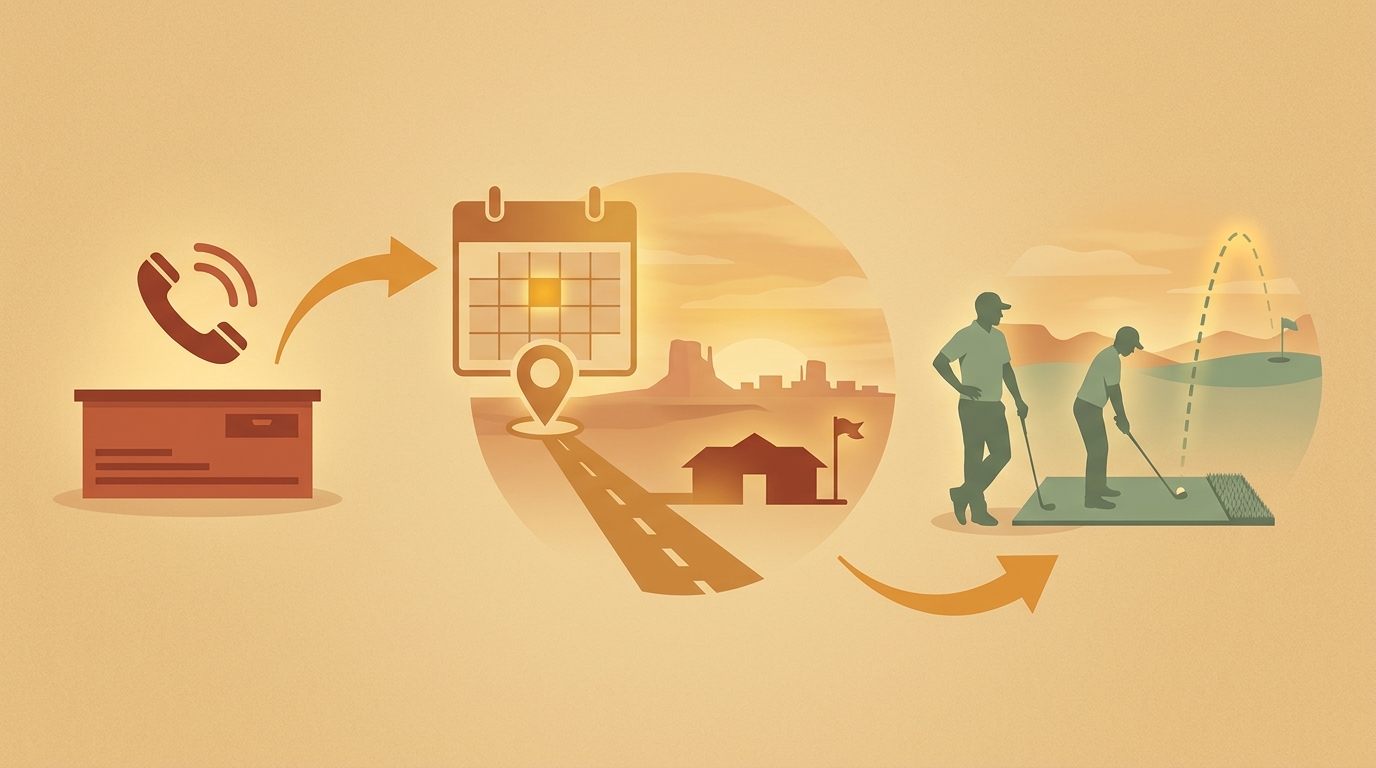
- Take a diagnostic lesson. One session. Let a coach identify the top one or two things holding you back.
- Drill those specific things for 3–4 weeks. On your own, at the range, with intent. Not just hitting balls — running the drill.
- Come back for a check-in lesson. Verify progress, get the next piece.
- Repeat seasonally. Most amateurs benefit from 4–6 lessons a year, blended with regular solo practice.
This blended model beats pure solo work and pure lesson-stacking. You're not paying for someone to watch you hit balls you could hit alone — you're paying for course corrections, then doing the reps yourself.
What to Look for in a Chandler Practice Facility
Whether you're taking lessons or grinding solo, the facility matters. Prioritize:
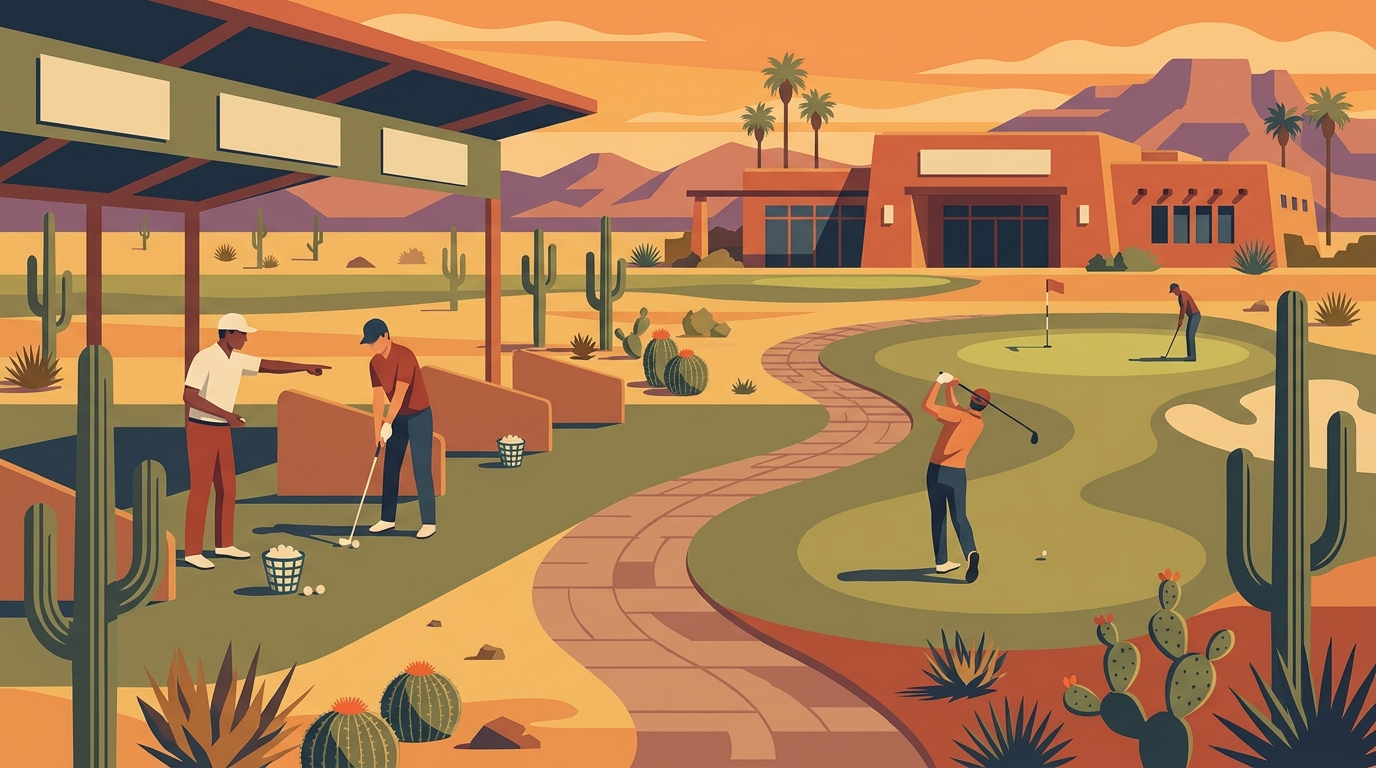
- Shot-tracking technology in the bays — real numbers beat feel-based guessing
- Shaded or covered hitting areas — non-negotiable May through September
- Short game area with actual green complexes — not just a chipping mat
- Access to the course from the range — being able to take your range work to real holes is huge
- Staff who know the game — recommendations, club fitting help, friendly answers to dumb questions
Dobson Ranch Golf Course fits this profile — the practice bays include shot tracker tech, the short game facilities get consistent praise in reviews, and the staff-service reputation (4.6★ across more than 1,500 Google reviews) reflects a place where beginners and regulars both feel welcome. As one recent reviewer put it, the team here is "top notch."
FAQ: Golf Lessons vs Self Practice in Chandler, AZ
How many lessons does a beginner need before practicing alone?
Usually 2–4 introductory sessions is enough to build a foundation — grip, stance, basic swing shape, short game basics. After that, solo practice becomes productive because you know what "correct" feels like.
Is it worth taking lessons if I only play a few times a year?
Yes, especially one lesson before the season. Casual golfers benefit most from short-game instruction, which stays with you between rounds better than full-swing tweaks.
Can I really improve just from YouTube and range time?
Some players do. Most plateau. The problem isn't the info online — it's that you can't see your own swing, and you'll misapply advice meant for someone else's issue.
When's the best time of year to take lessons in Chandler?
Fall (October–November) and spring (March–April) offer ideal temperatures and give you time to groove changes before peak season play. Summer lessons work if you go early morning or use shaded bays.
Should I get a club fitting before or after lessons?
After. Get your swing to a repeatable place first, then fit clubs to that swing. Fitting to a swing that's about to change is money wasted.
The Bottom Line
Solo practice builds volume. Lessons build direction. The golfers improving fastest in Chandler are the ones who blend both — a few well-timed lessons a year, with structured range work in between at a facility that actually supports skill-building.
If you want a place to do both under one roof, Dobson Ranch Golf Course in Chandler, AZ offers instruction, tech-equipped practice bays, and a full course to test your progress. You can explore lesson options and facility details at https://www.dobsonranchgolfclub.com/ — a solid next step whether you're breaking 100 for the first time or chasing single digits.