Here's the myth: a well-maintained 18-hole public course near Mesa, AZ has to be a $200+ resort track, and anything cheaper means burnt-out fairways and bumpy greens. That's wrong. Course quality in the Phoenix–East Valley is driven by agronomy practices, overseeding timing, and water management — not the price on the tee sheet. A municipal course with disciplined maintenance can out-condition a resort layout during the wrong week of the year.
This guide breaks down what actually signals a well-kept full round of golf near Mesa — and where the usual shortcuts (star ratings, green fee, flashy clubhouse) mislead you.
Does a Higher Green Fee Mean a Better-Conditioned Course in Mesa in 2026?
Price tracks demand, time of year, and amenities far more than it tracks turf quality. A disciplined municipal operation can match or beat a resort's playing surfaces.
What you're really paying for at the top of the range is tee-time scarcity, clubhouse amenities, and brand positioning. Agronomy — mowing heights, irrigation uniformity, aerification recovery, overseed quality — is a function of staffing and process, not sticker price. Dobson Ranch Golf Club, open to everyone since 1974, is a par-72, 6,712-yard championship layout with tree-lined fairways that illustrates the point: a municipal course can be a Golf Digest Top Rated designee without charging resort rates.
What Actually Signals a Well-Maintained 18-Hole Course Near Mesa?
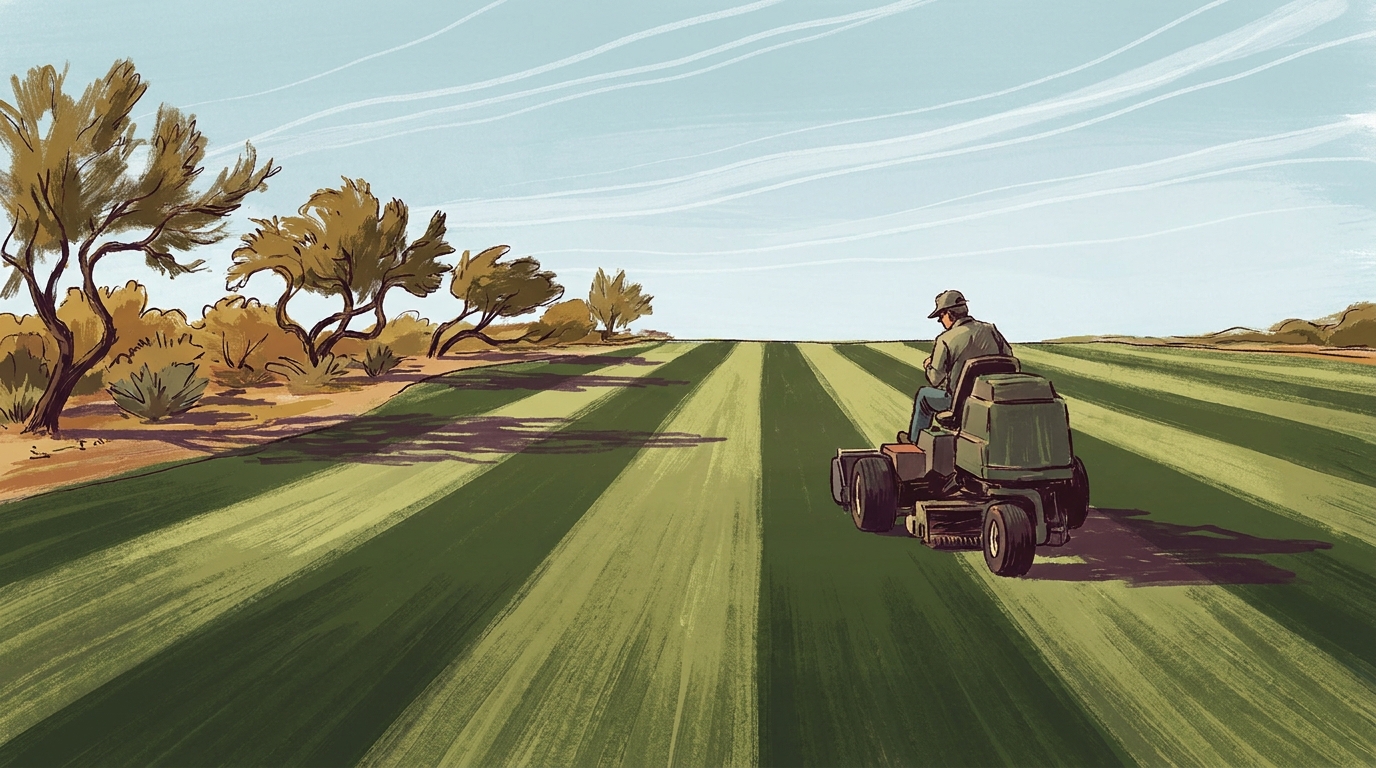
Look at four things: green firmness and roll consistency, fairway density and lie quality, bunker sand depth and edging, and how recently the course overseeded or aerified. A well-run course publishes its aerification and overseed windows, keeps cart-path rules clear, and shows uniform turf color across the property. Flashy carts and a nice grill don't tell you anything about the actual playing surface.
The desert gives maintenance crews a tough job. Water use is operationally significant in the arid desert climate, and bermuda-to-rye transitions in fall temporarily affect turf quality everywhere. A course that communicates openly about those cycles is usually one that manages them well.
When Are Mesa Courses Actually in Their Best Shape?
Peak playing condition in Mesa generally lands in mid-to-late winter — after fall overseeding has fully grown in, and before summer heat stress sets in. October through April is peak season for demand and pricing, but the first few weeks of October can coincide with overseeding closures or degraded surfaces at many area courses. Late November through March is typically the sweet spot for condition.
Summer (roughly June through September) is when heat suppresses play and green fees drop sharply. Conditions can still be solid on well-watered bermuda, but you're playing in triple-digit heat. If you want the best turf for your money, aim for January and February — demand is high, but so is quality.
How Do Overseeding and Aerification Affect a Full Round Near Mesa?
Autumn overseeding — when courses transition from summer bermuda to winter ryegrass — temporarily closes or degrades playing surfaces at many Mesa-area courses. Aerification punches holes in greens to relieve compaction and improve water penetration, leaving bumpy putting surfaces for one to three weeks afterward. Both are signs of good long-term maintenance, not neglect.
The trick is timing your round around them. A course that posts its overseed and aerification dates on its website is doing you a favor; a course that doesn't is hoping you won't notice. Call ahead if a tee time falls within four weeks of a listed maintenance window.
What Should You Compare Across East Valley Public Courses?
Mesa sits inside a competitive regional supply — golfers routinely pick among courses across the greater Phoenix area rather than a Mesa-only set. That means you can and should compare on more than proximity. Here's a quick framework:
| Signal | What to Check | Why It Matters |
|---|---|---|
| Green fee range | $18–$69 value / $20–$80 standard / $150–$250+ premium | Price reflects demand and amenities, not necessarily turf |
| Season timing | Oct–Apr peak, summer discounted | Peak = higher prices, usually better turf after overseed grows in |
| Maintenance transparency | Posted overseed/aerification dates | Signals operational discipline |
| Course length & par | Par 72, mid-6,000-yard range is typical championship spec | Benchmark for a full round of golf |
| Practice facilities | Range, short game, putting | Indicates investment in the overall property |
Dobson Ranch Golf Club's 18-hole championship layout — par 72, 6,712 yards, tree-lined fairways — fits the championship spec cleanly, and the property also includes Smashers On Driving Range with Inrange-powered bays and The Stable putting course where kids play free every day.
Does a Nicer Clubhouse Mean a Better Round of Golf?
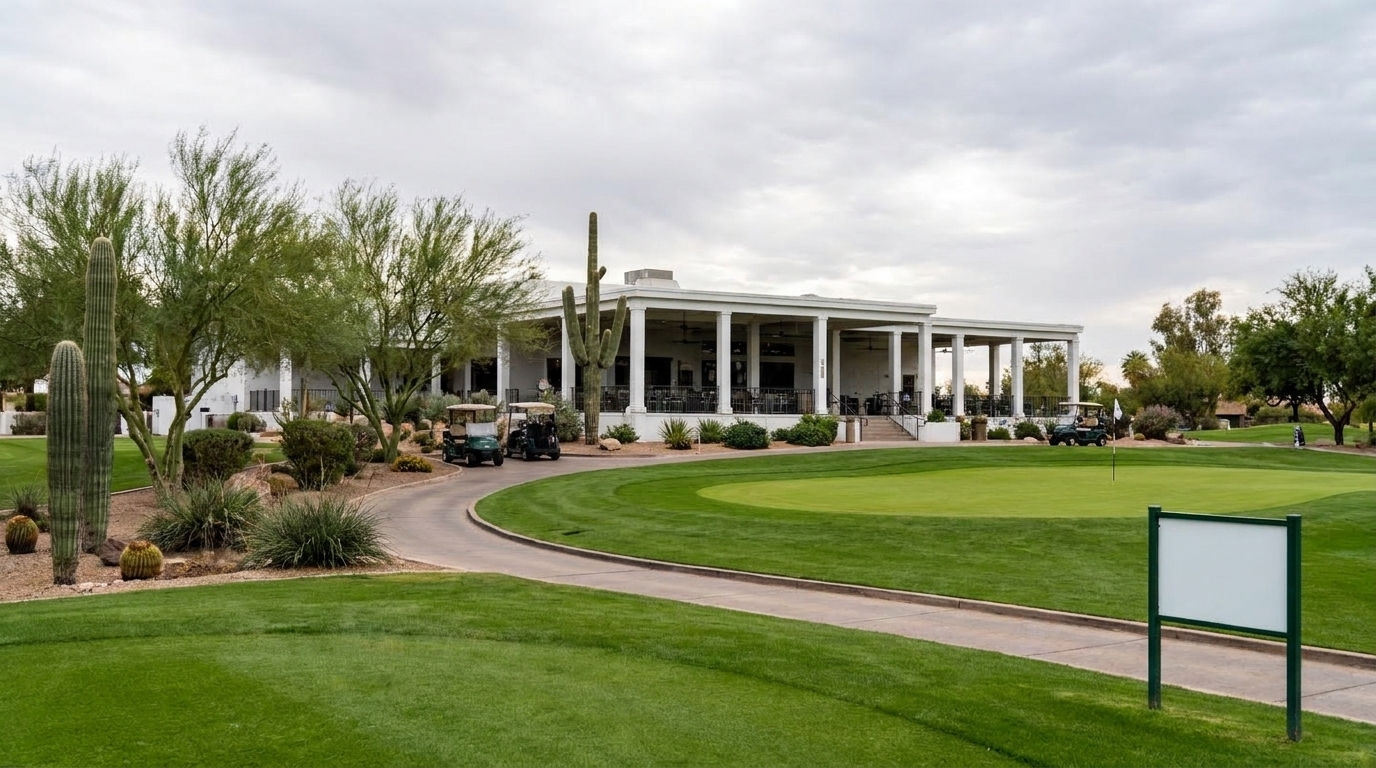
No. A clubhouse tells you about the food-and-beverage program and the pro shop margin, not the agronomy budget. Some of the best-conditioned municipal courses in Arizona run modest clubhouses because the operation reinvests in turf, irrigation, and staff. Conversely, a polished clubhouse can mask tired greens.
Judge the course by the course. Walk the practice green before you tee off — if it's rolling true and consistent, the main greens probably are too. Check a fairway lie on hole one. These five-minute signals beat any website photo gallery.
Do You Have to Dress Up to Play a Quality Course in Mesa?
No. The dress-code assumption is another myth worth retiring. Plenty of well-maintained public courses in the Phoenix area welcome players in athletic wear and relaxed attire. Dobson Ranch Golf Club, for example, explicitly states it has no stuffy dress codes. Quality turf and a welcoming atmosphere are not mutually exclusive.
Frequently Asked Questions
What's the typical price range for an 18-hole public round near Mesa, AZ?
Actual pricing varies by tee time, day of week, season, and booking platform, so confirm directly with any course before booking.
When should I avoid booking a round in Mesa because of maintenance?
Autumn overseeding, typically in September and early October, is the main window to avoid or at least ask about. Many area courses close temporarily or play in rough condition while winter rye germinates. Aerification periods — which vary by course — leave greens bumpy for one to three weeks. Call ahead if your tee time falls within a month of either.
Is a municipal course as well-maintained as a resort course?
It can be. Course condition depends on agronomy practices, irrigation discipline, and staffing — not ownership model. Dobson Ranch Golf Club describes itself as the number one municipal course in Arizona and has received a Golf Digest Top Rated designation, which shows a municipal operation can compete on quality. The right question isn't municipal vs. resort; it's how the course is actually run.
What does par 72 at 6,712 yards tell me about a course?
Par 72 at roughly 6,700 yards is a standard championship-length public course — long enough to challenge mid and low handicappers from the back tees, playable from forward tees for everyone else. Dobson Ranch Golf Club's layout matches this spec with tree-lined fairways. It's a benchmark worth using when you compare a full round of golf near Mesa.
What's the best month to play in Mesa for course conditions?
Late January through March generally delivers the best combination of grown-in overseed, mild temperatures, and firm playing surfaces. October can be dicey because of overseeding; November and December are usually solid; April is still good but warming up. Summer rounds are cheap but hot, and conditions depend on how well a course manages heat stress and irrigation.
Where can I practice or warm up without booking a tee time near Mesa?
Dobson Ranch Golf Club offers walk-in access to its driving range with no reservation required, and operates Smashers On Driving Range with Inrange-powered bays, practice games, and food and drink delivery to the bays. The property also includes The Stable, a putting course where kids play free every day. It's a flexible option if you want to work on your game without committing to 18 holes.
The Bottom Line
Course quality near Mesa is about agronomy, timing, and operational discipline — not green fee or clubhouse polish. The best way to find a well-maintained 18-hole round is to play in the right window (late winter), ask about overseed and aerification dates, and judge the course by the course itself. Readers in Mesa, AZ who want to see what a well-run municipal championship layout looks like can reach Dobson Ranch Golf Course at (480) 644-2291 or visit https://www.dobsonranchgolfclub.com/ to check tee times, range access, and current conditions.