You're standing in Mesa with a free Saturday, a set of clubs, and a question: do you book the $40 tee time or the $140 one? Both are legit. Both are local. But they're not the same experience — and the price gap can feel wild, especially when the same course charges different rates depending on the season, the hour, and how busy the booking screen is that morning.
So let's cut through it.
Here's an honest look at affordable vs premium golf courses in Mesa, Arizona — what each tier actually delivers, when the upcharge earns its keep, and how to decide which round fits the day you're planning.
The Two Tiers of Public Golf in Mesa
Mesa's public golf market splits into two broad lanes.
The value tier. Municipal and affordable daily-fee courses. Think roughly $30–$45 for 18 holes in summer mid-day, $25–$35 at twilight, and $45–$70 on a winter weekday. Peak winter weekend mornings push toward $70–$90.
The premium daily-fee tier. Higher-end public courses like Longbow Golf Club out on E Longbow Pkwy. Summer rates run $50–$90, winter shoulder season jumps to $80–$150, and peak winter prime morning tee times can hit $120–$180 or more.
Then there's the regional premium tier — Scottsdale resort courses just minutes from Mesa — where peak winter rounds can run $200 to $500+. We're not focused on those here, but they shape the price ceiling for everything in the East Valley.
What You Actually Get at Each Price Point
Course Conditioning and Design
This is the biggest tangible difference.
Premium courses spend more on water, turf, bunker maintenance, and tee box conditioning. In a desert climate like ours, that matters. Water isn't cheap in Maricopa County, and Arizona regulates groundwater and reclaimed water usage tightly. Courses maintaining lush fairways and pristine greens are paying real money to do it — and that cost rolls into your green fee.
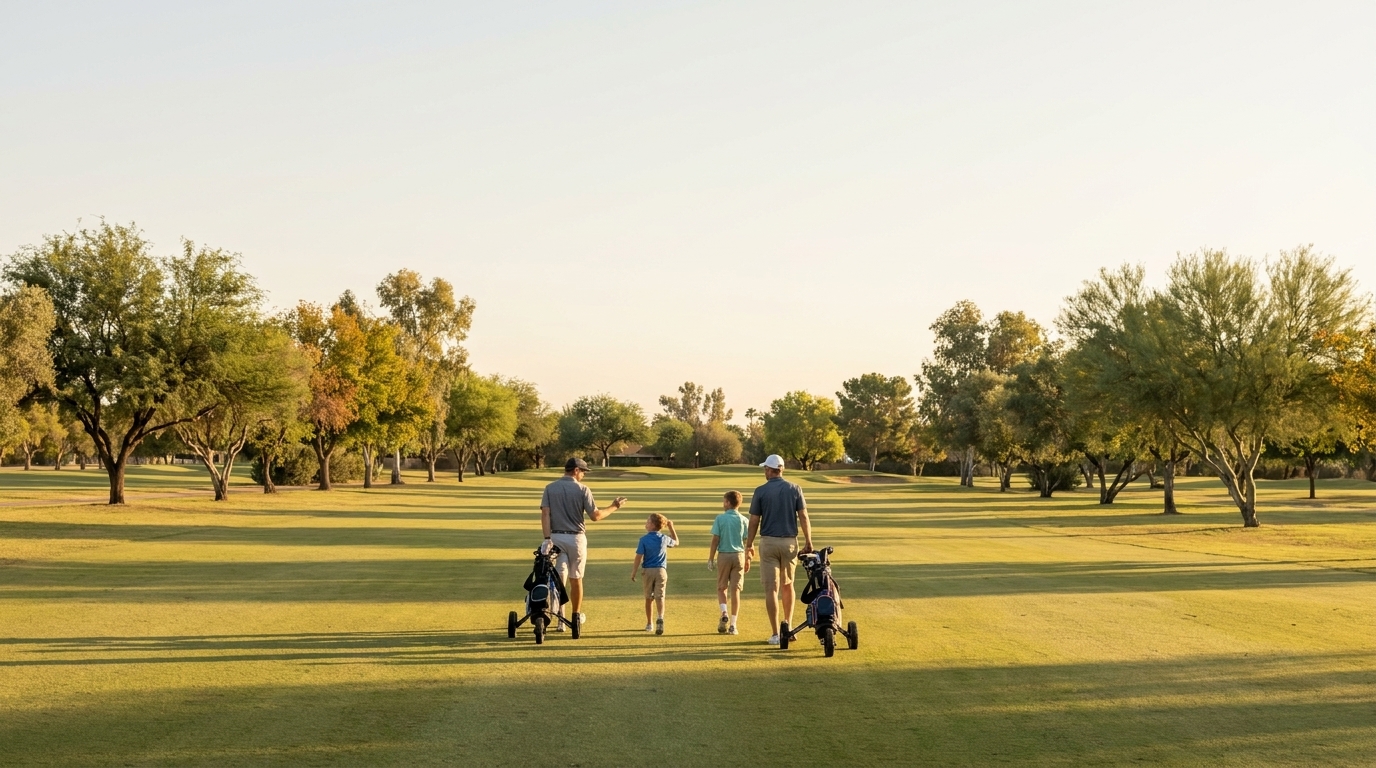
Value courses still play well. Dobson Ranch Golf Club, for example, is a par 72 championship layout established in 1974 and was rated the #1 Municipal Course in Arizona by Golf Digest. You're getting a real course — not a glorified driving range — at a price that lets you play weekly without flinching.
The difference? Premium courses lean into manicured perfection. Value courses lean into playability and access.
Tee Time Availability
Premium courses cap rounds and pace play more aggressively. You'll typically finish faster.
Affordable courses see heavier volume, especially during snowbird season from January through March. Rounds can stretch toward five hours on a busy winter weekend morning.
If your time is more valuable than your dollar, that gap matters.
Practice Facilities and Tech
This one's shifting. Premium courses traditionally owned the practice-facility advantage — big ranges, short-game areas, putting greens with real contour.
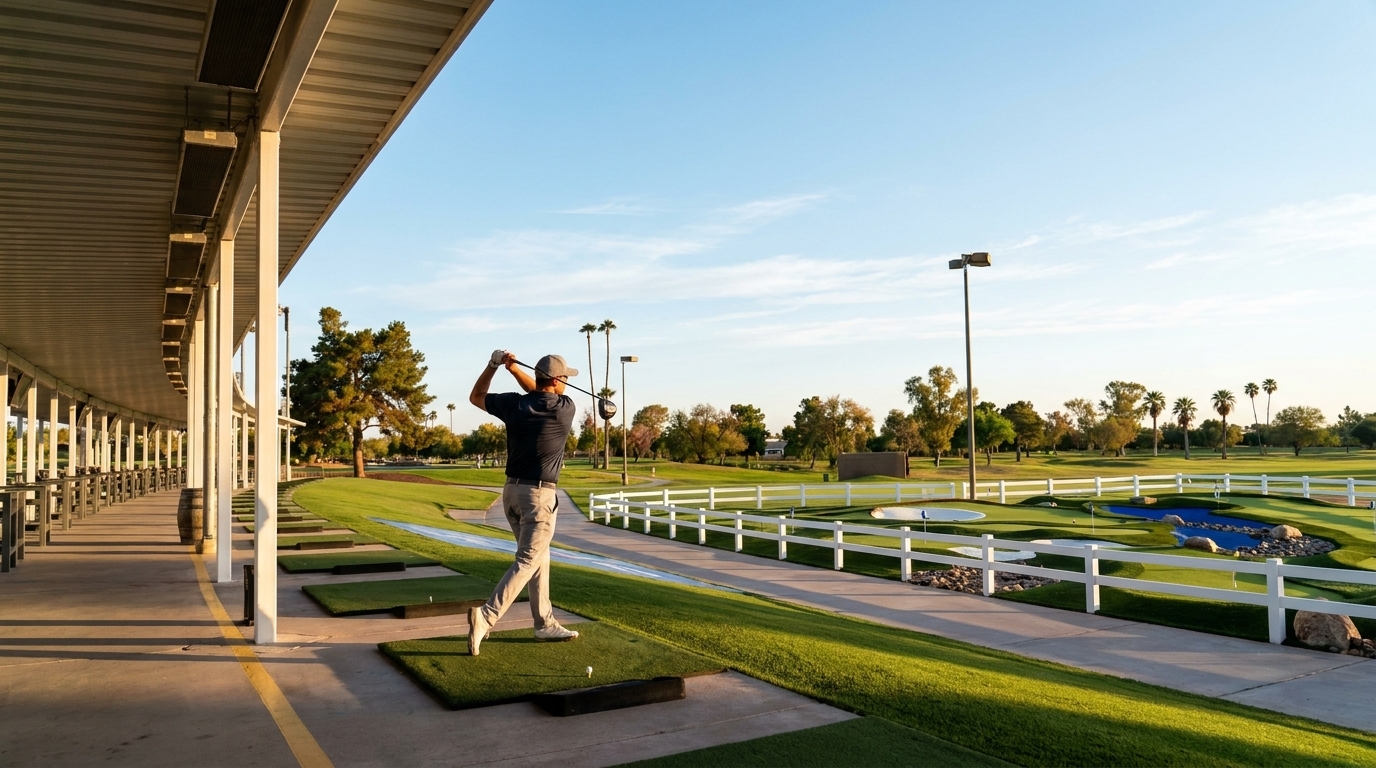
But value courses have closed the gap. Dobson Ranch runs a high-tech "Smashers On" driving range with Inrange-powered bays — the kind of tracking tech you'd expect at a premium venue. That's a real differentiator in the affordable tier.
Clubhouse, Dining, and Vibe
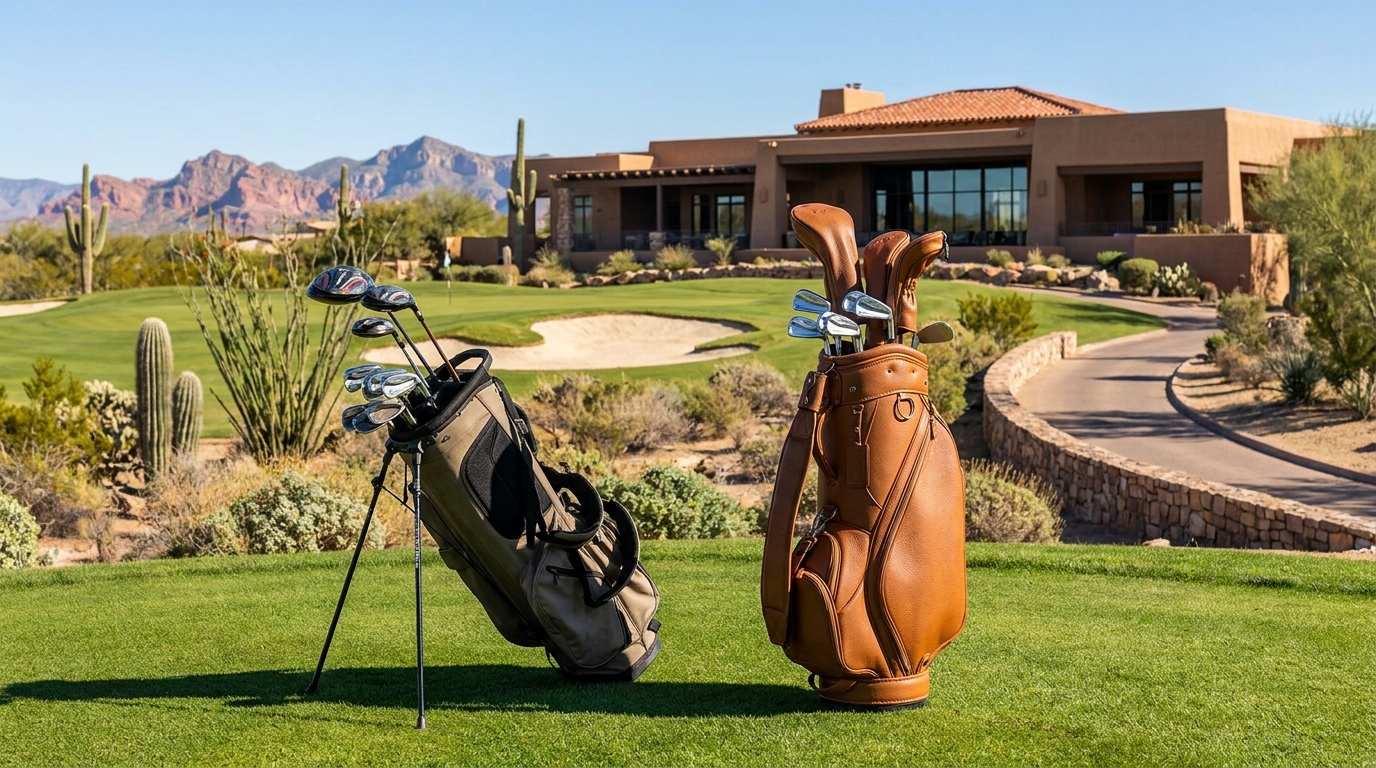
Premium courses invest in the wraparound experience. Better grill menus. Nicer locker rooms. Pro shops with current-season gear.
Mid-market operators like Superstition Springs Golf Club, run by Arcis Golf here in Mesa, offer dining, instruction, and booking features like their "Six Pack" tee time option — bridging the gap between value and full premium.
Value courses keep it simpler. Cold drinks, hot dogs at the turn, friendly staff. Less polish, more golf.
When Premium Is Worth It
Pay up when:
- You're hosting visitors. Out-of-town guests during January–March snowbird season expect a showcase round. A premium tee time delivers it.
- You're playing a milestone round. Birthday, bachelor party, client outing — the upcharge buys atmosphere.
- You want fast pace and tight conditioning. If five-hour rounds break your spirit, premium courses generally move quicker.
- You're a serious amateur grinding on a specific layout. Some premium designs reward repeated study in ways municipal layouts don't.
When Affordable Wins
Stick with the value tier when:
- You play frequently. The math is brutal. Four premium rounds a month at $140 versus four value rounds at $45 is a $380 monthly swing. That's a new driver every quarter.
- You're learning or rebuilding your game. You want reps. You want forgiving conditions. You don't want to pay $160 to shoot 105.
- You're playing in summer. From June through September, Mesa's extreme heat depresses demand and crushes prices across both tiers. Twilight rounds at value courses become absurdly affordable.
- You value community over polish. Municipal courses anchor neighborhoods. The regulars know each other. The vibe is real.
The Mesa-Specific Factors That Should Shape Your Choice
A few things make this decision different here than it would be in, say, the Midwest.
The summer-winter price swing is dramatic. The same premium tee time that costs $160 in February might cost $65 in July. If you can play in the heat — and the right hydration plan makes early mornings genuinely pleasant — you can experience premium courses at value prices.
Loyalty programs reward locals. Longbow offers a Summer Loyalty Card at $225 that earns reward points through October 31st. Dobson Ranch runs a players card savings program. If you live here year-round, these tools meaningfully lower your effective rate.
Proximity to Scottsdale changes the math. Mesa courses position themselves either as value alternatives to Scottsdale's marquee names or as comparable-quality plays at a real discount. Either way, you benefit. You're paying East Valley prices for golf that often rivals what's across the 101.
Twilight is your friend. Both tiers discount heavily for late-afternoon tee times. A premium course at twilight in shoulder season often costs less than a value course at peak winter morning.
FAQs
Is expensive golf worth it in Mesa?
Sometimes. For special occasions, visitor rounds, or when you specifically want tighter conditioning and faster pace, yes. For routine weekly play, the value tier delivers most of the experience at a fraction of the cost — especially at courses like Dobson Ranch that punch above their price point.
What's the cheapest time to play golf in Mesa?
Summer twilight, hands down. June through September, mid-afternoon to evening tee times at value courses can dip into the $25–$35 range for 18 holes.
Do Mesa courses offer resident discounts?
City-owned municipal courses, governed by Mesa's parks and recreation framework, often offer resident, senior, and junior pricing. Check directly with the course.
Is dynamic pricing standard in Mesa?
Yes. Nearly every public course in the region uses dynamic pricing — rates shift by day, time, and demand. The price you see Tuesday may not match Friday's rate for the same tee time slot.
The Bottom Line
Premium golf in Mesa buys you conditioning, pace, and atmosphere. Value golf buys you frequency, community, and a budget that survives the month.
Neither is wrong. The right answer depends on which round you're booking, not which tier is "better."
If you're a Mesa local looking for a course you can play often without burning through your wallet — and still get a championship layout, modern range tech, and the Golf Digest pedigree of Arizona's top-rated municipal — Dobson Ranch Golf Club is worth a look. You can check current tee times and the players card program at https://www.dobsonranchgolfclub.com/.
Play more. Spend smart. See you out there.